 Commercial Waste Gunnersbury — Health & Safety Policy
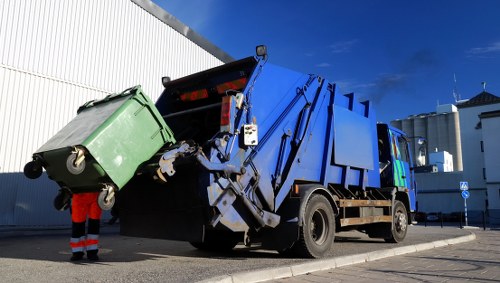
Commercial Waste Gunnersbury maintains this Health and Safety policy to ensure safe, compliant and efficient delivery of commercial waste services across our rubbish company service area. The purpose of this policy is to set clear standards that protect staff, subcontractors, clients and the public during all stages of rubbish collection, transport and disposal. Our approach balances practical operational requirements with statutory duties and industry best practice for commercial waste removal and rubbish disposal service area management.
 Policy scope and objectives
This policy applies to all activities undertaken by the company, including scheduled bin collections, ad hoc skip services, transfer operations and contracted commercial waste removal work. Objectives are to: reduce workplace risks; prevent injuries and occupational ill-health; ensure safe operation of vehicles and plant; secure correct segregation and labelling of waste streams; and promote continuous improvement in our waste management in Gunnersbury and surrounding service areas. We commit to appropriate resource allocation to meet these objectives and to keep health and safety central to service delivery.
 Roles, responsibilities and communication
Clear lines of accountability support safe operations. Senior management holds overall responsibility for policy implementation, while supervisors and team leaders are responsible for day-to-day safe systems of work. Employees and contractors must follow procedures and report hazards without delay. Key responsibilities include:
- Management: policy enforcement, risk assessment approval, resourcing health and safety.
- Supervisors: operational oversight, training delivery and incident investigation.
- Employees and drivers: adhere to safe working methods, use PPE and report defects or near misses.
Risk assessment and control measures form the backbone of our safety management system. Each routine and non-routine task undergoes documented risk assessment, supported by safe operating procedures for vehicle loading, manual handling during rubbish collection rounds, secure containment of loose refuse and safe use of lifting equipment. Controls include vehicle speed limits in yards, exclusion zones when loading skips, mechanical aids for heavy items and clear signage for hazardous loads. We ensure that the rubbish company service area map of operations reflects current hazards and controls without disclosing sensitive site details.
Training and competence are mandatory. Induction, periodic refresher courses and task-specific instruction are provided for drivers, loaders and maintenance staff. Personal protective equipment (PPE) requirements are defined for each role and enforced: high-visibility clothing, gloves, eye protection and appropriate footwear. Vehicle and plant operator licences and certifications are verified and maintained.
Operational controls for waste segregation, labelling and transport follow industry standards. Hazardous or special wastes are identified, segregated and processed according to legal and environmental requirements. Our teams use standardised containers and documentation to ensure waste tracking, minimising contamination and protecting operatives during handling.
Vehicle safety and site operations receive particular attention. Fleet maintenance schedules, pre-shift checks and defect reporting systems reduce mechanical risk. Drivers follow safe loading procedures for skips and compactors, and luggage/securement protocols for mixed loads to prevent shifting during transit. Routes in our rubbish collection Gunnersbury zone are planned to reduce exposure to high-risk manoeuvres and congested locations, while remaining responsive to clients' needs across the service area.
 Emergency preparedness and incident response are integral. The company maintains spill kits, trained first-aiders and an established procedure for releasing information to emergency services where required. Incidents, near misses and environmental releases are logged and investigated; corrective actions are tracked to completion. We emphasise quick containment and appropriate notification for spills or hazardous material incidents to limit harm to workers and the public.
 Monitoring, audit and review processes drive continual improvement. Regular internal audits, routine toolbox talks and performance reviews evaluate adherence to this policy and operational standards for commercial waste removal. We set measurable targets for incident reduction, training completion and vehicle compliance checks. Findings from audits inform updates to procedures, and reviews of the Health and Safety policy are scheduled at least annually or after significant operational change.
Our commitment is to a proactive safety culture: everyone engaged in rubbish disposal service area operations is encouraged to speak up about safety concerns and contribute to safer ways of working. This policy is an active document; it is communicated to all personnel and is accessible for partners and contractors who support our commercial waste services. Safe operations are a shared responsibility and a condition of employment and engagement.
Compliance with applicable regulatory requirements and alignment with recognised standards underpin our approach. Records of training, risk assessments, vehicle inspections and incident investigations are maintained to demonstrate that the company meets its obligations and continuously improves health and safety outcomes across its rubbish company service area.
Review and endorsement: this Health and Safety policy is endorsed by senior management, who will ensure it remains relevant to operational needs and to evolving best practice. Regular reviews and prompt updates following significant incidents or regulatory change ensure the policy remains effective in protecting people, property and the environment while delivering high-quality commercial waste collection and management services.
